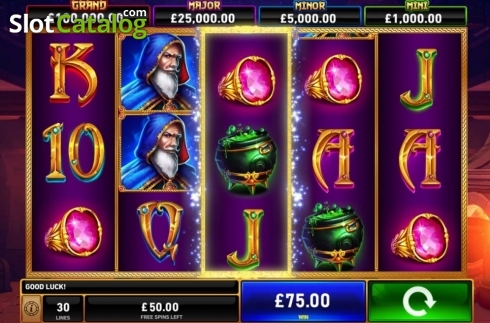


Playing Blue Wizard Slot means engaging with software founded on strict mathematical rules https://bluewizard.eu.com/. Behind the colourful graphics and magical theme lies a system driven by probability and a key figure known as Return to Player (RTP). This piece describes the maths inside Blue Wizard Slot. We’ll examine beyond the surface magic to grasp how its random number generator, volatility, hit frequency, and bonus odds determine what you can count on over thousands of spins. We’re not trying to predict your next win—that’s always random. Instead, we intend to give you a clear picture of how the game behaves. With this, you can establish sensible expectations, manage your money smarter, and recognize the clever design choices for what they are. Everything here is derived from public data and standard slot maths for this game.
The Heart of Luck: Random Number Systems and Fairness
Blue Wizard Slot operates with a approved Random Number Generator (RNG). Consider this algorithm as a system that generates random numbers constantly, thousands every second. Each number corresponds to a certain set of symbols on the reels. The moment you hit spin, the game fetches the newest number from that sequence and employs it to set your reels. This creates every spin a independent event. It’s unforeseeable and fair, with no relation to what happened before or what comes next. The RNG is the bedrock of chance in any trustworthy online slot. It guarantees the official maths actually reflect what happens when you play. Independent testing labs and regulators examine these RNGs periodically to verify they are truly random. So, any discussion about probability in Blue Wizard Slot has to start with one fact: outcomes are entirely random, based on how the symbols are arranged across the reels. You won’t discover patterns. A big win is never “due.” The game functions on genuine chance.
Key Takeaways and Responsible Play
Understanding the math of Blue Wizard Slot should shape a tactical and mindful way to engage with it. Understanding it’s high variance should direct your bankroll management. Define a session budget that can handle a possible extended streak of losing spins without leading you to chase losses. Bet sizing matters. Since you need those larger wins to approach the theoretical RTP, your bets need to be small enough to let you spin enough times to experience those winning cycles. Trying to force a bonus is a waste of effort in statistical terms, since every spin is separate. A disciplined, budget-conscious style aligns with the mathematical reality. This is the key strategic takeaway: no tactic can beat the house edge or foretell the RNG. The maths confirm that over a extended period, the casino retains its percentage. So, the optimal application of this knowledge is to support responsible play. Establish limits. Consider your wagers as the price of entertainment. Savor the excitement within the clear framework of comprehended probabilities. This is how you discover the real “magic” in Blue Wizard Slot.
Common Queries on Slot Probability
Let us tie things together by responding to some typical questions players ask about the maths behind slots like Blue Wizard Slot.
In what way are the odds determined for particular jackpot wins?
The probabilities for a particular combination, like a full screen of the top symbol or a mega win in the bonus, are derived from multiplying the probability of each required symbol landing on its designated reel position. For a five-reel slot, that’s the chance of Symbol A on Reel 1 times the chance of Symbol A on Reel 2, and so on. These probabilities stem from the number of reel stops given to that symbol versus the total stops. For the absolute top jackpot, this probability is incredibly small, often around 1 in several million spins. That’s how the game can offer such huge payouts while still achieving its overall RTP target.
Does the RTP vary based on my bet size or chosen features?
In most modern online slots, Blue Wizard Slot included, the RTP is fixed. It remains constant if you adjust your coin value or bet level. The whole mathematical model scales with your stake; a win is usually a multiple of your total bet. Nevertheless, it’s wise to check the game rules. Some slots offer optional “side bets” or feature buy-ins that might carry a different RTP from the core game. The advertised base game RTP applies to standard spins across all normal bet sizes.
Can you use probability to time when to play or to trigger a bonus?
Not at all. This is a fundamental misunderstanding. Because the game uses a genuine RNG and every spin is unrelated, there is no pattern, cycle, or perfect time that affects the result. Each spin is a new event with the same fixed odds as the last one. The belief that a bonus is “due” after a long losing streak is called the gambler’s fallacy. It’s logically wrong. The likelihood of triggering the bonus on your next spin stays just the same, no matter what happened on the previous spins.
Our examination under the hood shows Blue Wizard Slot is a carefully calculated entertainment product. The captivating visuals rest on a strong base of probability and statistical expectation. The blend of RTP, high volatility, and feature-heavy payouts creates a distinct experience built on anticipation and the potential for big rewards. This is countered by the certainty of randomness and a built-in house edge. When you understand these notions—the RNG’s role, what RTP really means long-term, and how volatility feels—you can play with more awareness. This awareness encourages more informed, more responsible play. Your actions come from mathematics, not myths. You can experience the spectacle for what it is, knowing precisely how chance shapes the game.
Hit Frequency and the Likelihood of a Successful Spin
Strike rate correlates with volatility. It represents the share of turns that produce any payout at all, though it’s just a small part of your wager. A elevated hit frequency machine might reward on 40-50% of spins. A weaker one might fall within the 20-30% range. Blue Wizard Slot, fitting its profile, probably has a hit frequency near the lower end. This provides you with the fundamental chances of seeing a win on any given spin. Remember, this includes every type of payout. It differs from the probability of activating a bonus or hitting a premium prize. The machine’s creators set the hit frequency by choosing how many high-value images, low-paying images, and gaps are placed on each virtual reel. A weaker hit frequency is a calculated trade-off. The funds not rewarded on frequent modest returns is gathered to fund those less common, but far greater, jackpots. So, gamblers should anticipate many rounds to result in zero return. That’s a typical part of the game’s chance structure.
Examining Symbol Combinations and Paytable Probabilities
The paytable for Blue Wizard Slot is not just a prize list. It’s a direct look into the game’s weighted probability system. Each symbol has a fixed number of positions on each reel strip. The chance of a specific combination landing is the product of the odds for that symbol appearing on each required reel. For example, the highest-paying standard symbol (probably the Wizard) will have significantly fewer copies on the reels compared to the lower-paying card symbols. This scarcity makes its big combinations rare. We can see how each symbol type adds to the game’s calculations:
- Low-Pay Symbols (Card Suits): These have the largest chance of appearing. They create common small wins that help sustain your balance, but they contribute little to the long-term RTP.
- High-Pay Symbols (Theme Characters): These show up less often. Their payouts are greater, so they add considerably to the RTP when they hit. Their lower probability is what drives the volatility.
- Wild Symbols: They usually stand in for others, enhancing the chance of making a winning line. A line of wilds often awards the most, but the odds of that happening are extremely low.
- Scatter Symbols: Their probability is set independently, as they typically need to land in a particular, non-linear way (like 3 or more anywhere) to start bonus rounds.
Fluctuation and Volatility: The Pace of Payouts and Defeats
Volatility, or variance, describes a slot’s volatility and reward schedule. It shows how often and how large wins will be compared to your stake. Blue Wizard Slot is typically a medium to high volatility game. The structure means you’ll see less common winning spins on average. But the wins that do land have the capacity to be much larger than your stake. This high volatility leads to bigger swings in your bankroll. You’ll go through periods of drawdowns or minor gains, hoping for the more rewarding lineups or extra modes to trigger. Contrast this to a low volatility slot, which provides regular, modest payouts for a steadier, less erratic ride. Knowing this is vital for your strategy. To spin Blue Wizard Slot effectively, you require a bankroll that can endure the lean stretches while you bide your time for those greater payouts. It’s a game that rewards endurance. The mathematical expectation plays out through sporadic large wins, not a steady trickle of spins.
The Mathematics of Bonus Rounds and Bonus Spins
Bonus rounds and bonus spins are where a volatile slot similar to Blue Wizard Slot usually holds its anticipated value. The probability of triggering the free spins round, usually by landing three or more scatters, is a fixed, pre-set number. This might be something like 1 in 200 spins or even rarer, which underlines the game’s volatile nature. Once the bonus round starts, the maths often shift. The complimentary spins could use a varied reel set or include particular features like expanding wilds or multipliers. This new state has its own built-in RTP and fluctuation, usually higher than the primary game. That’s why these elements are so coveted. The largest payouts exist here. Consider a free spins round with a multiplier symbol that expands with each win. The distribution of payoffs leans towards the chance of one highly profitable sequence. The slot’s combined expected value integrates the low probability of entering the bonus with the high average payout you get from it. This generates a “lumpy” return pattern, the hallmark of a high-volatility slot.
Explaining Return to Player (RTP) and The Long-Term Meaning
The Return to Player (RTP) is a theoretical percentage. It shows the anticipated amount of all wagered money the slot will pay back over a prolonged time, often across millions of spins. Let’s say Blue Wizard Slot has an RTP of 96.2%. In theory, for every £100 staked, it should return £96.20 over its lifetime. Don’t misinterpret this for a short-term promise. In one sitting, you could get back much more or, more likely, much less than that. The RTP only evens out over the game’s entire existence and across all players. Developers build this number into the game by adjusting how often each symbol appears. A higher RTP usually means a smaller advantage for the casino. But RTP alone doesn’t tell you about the game’s flow. Two slots with the same RTP can feel completely different. One might hand out small wins often. Another, like Blue Wizard Slot, might pay less frequently but in bigger chunks when bonuses hit. Both can still reach the same RTP in the end.